Can you compost meat, bones, fish or dairy? What the sources say
No, not in a home pile: they draw animals, and backyard piles usually don't get hot enough. Bokashi and some city programs take them. Added some? Take it out.
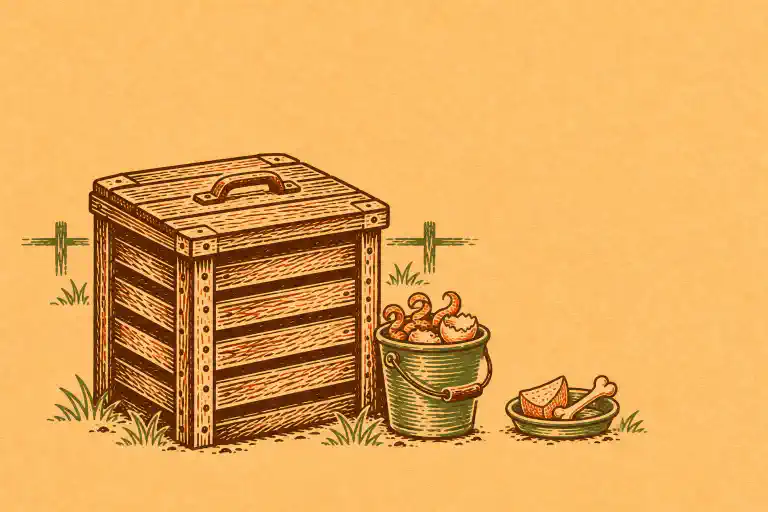
No. Keep meat, poultry, fish, bones, dairy and grease out of a home compost pile or bin. They can attract animals, and backyard piles generally don’t get hot enough to fully break them down. Extension guides from NC State, Minnesota, Iowa State and NDSU keep meat, bones and dairy out too, and none of the guides we read makes an exception for tumblers. None of them clears a hotter home pile either. The ways the sources allow instead are a bokashi bucket or a city program, and if some already went in, take it out.
Quick answers
| Item | In a home pile? | What the sources say |
|---|---|---|
| Meat and poultry, raw or cooked | No | EPA, NC State, Minnesota, Iowa State and NDSU keep it out |
| Bones | No | Most say no; one county list allows ground bones |
| Fish | No | EPA, NC State and NDSU say no; the same county list allows buried fish scraps |
| Cheese, milk and other dairy | No | All the sources above say no; NDSU names butter, milk, sour cream and yogurt |
| Eggs | Shells yes, whole eggs no | EPA lists crushed eggshells as a green; Minnesota keeps whole eggs out (eggshells) |
| Grease, fat and cooking oil | No | EPA and NDSU keep them out |
| Cooked leftovers | A little, buried | EPA: “small amounts are fine” (how) |
Our reading on leftovers: if a dish has meat, fish or dairy in it, treat it like those foods and keep it out. EPA lists cooked food and meat separately and doesn’t settle it.
Worm bins are no different: EPA’s worm-bin advice keeps out meat, dairy, greasy foods and bones. Pet waste has its own answer in dog poop in compost.
Can you compost bones?
Not in a home pile, by most sources: EPA, NC State, Minnesota and NDSU keep bones out. Sarasota County’s UF/IFAS list is the exception. It says yes to “Ground bones” and “Bone meal” and no to “Bones, unground,” though the same table also lists bones as a no under animal by-products. It doesn’t say how to grind them. Our reading: follow the majority and the federal source, so a chicken carcass or a beef bone stays out of the bin.
Can you compost fish?
The same Sarasota list says yes to “Fish scraps (buried)” and maybe to “Fish waste (if buried deeply),” with “Use your judgment.” It gives no depth. EPA, NC State and NDSU say no. Same reading: keep fish out of a home pile.
Why meat and dairy stay out of a home pile
Two reasons run through the sources: animals and heat. Meat, bones, grease and dairy attract rodents and other animals.
A home pile also runs too cool. Of the passively aerated static pile or bin used for home composting, EPA says it “usually does not get the pile hot enough to break down materials such as meat, bones, and dairy products.” That’s no reason to worry about an ordinary bin: as our cold compost guide explains, small home bins often stay cold and still make compost.
What the sources allow instead
What the sources allow is a different system, or someone else’s bigger pile.
A bokashi bucket
Bokashi ferments rather than composts. Food scraps go into a sealed bucket with bokashi bran, which is wheat bran or rice hulls infused with microorganisms, and the method takes almost all types of food waste, including meat, dairy, cooked food “and even small bones.” WSU Extension’s steps:
- Sprinkle a handful of bran over each addition, press the scraps down and seal the lid.
- Drain the liquid every few days.
- Once the bucket is full, let it ferment for about two weeks.
You’ll need the bucket and the bran. One kit with both is the SCD Probiotics All Seasons Indoor Composter kitad, a 5-gallon bucket with a bag of bran.
What comes out isn’t finished compost: it has to be mixed with soil to finish breaking down. WSU gives several ways to do that, including these two:
- In the ground: bury it 8–12 inches deep, mixed with at least 2–3 times its volume of soil, and cover it completely. Wait at least 2 weeks, ideally 3–4, before planting; cooler soils may take longer.
- In your pile: bury it in the center as a green, balance it with browns, and cover it completely to avoid odors or pests.
The catch: you need a steady supply of bran, bought or homemade, and the fermented scraps should never be left exposed.
City and county programs
Some cities and towns collect food scraps at the curb, and some run drop-off sites. Not every program takes meat and dairy, so check with your local composting or recycling coordinator; if you’re taking scraps to a commercial facility yourself, check that it accepts them. Large composting facilities can take all of these foods, grease included, with the proper permits.
Austin, Texas, is one city whose curbside cart takes them: its green cart takes cooked or raw meat, poultry and seafood, bones included, plus cheese and dairy. Austin says the pile at its commercial facility heats to very high temperatures that can break these down, which typically can’t happen in a backyard pile. Even Austin keeps fats, oils and grease out of the cart, and it suggests freezing meat, poultry and fish until it’s time to put them in.
If you already added some
Take it back out. When meat, dairy or greasy food in the pile draws scavenging pests, Clemson Extension’s fix is to “Remove meat and fatty foods from the pile.” Our reading: do it before pests find it. Wear gloves, and wash your hands afterward.
Then cover what’s left. Bury the other scraps under 4–8 inches of dry leaves or other browns, and keep the bin closed with a lid, possibly a floor, and no gaps larger than ¼ inch.
Rats or maggots already there? See rats, flies and other pests and maggots in the compost bin.
What goes in the bin instead
For the scraps that do belong in the bin, stick to fruit and vegetable scraps, coffee grounds and crushed eggshells, and check anything else on can I compost it?. Anything the bin, the cart or a bokashi bucket can’t take goes in the trash. The rest of the no-list is in what not to put in a home compost pile.