What not to put in a home compost pile
Meat, dairy, cooked food, pet waste, and diseased plants cause most compost pests and smells. What to leave out of a home compost pile, and why.
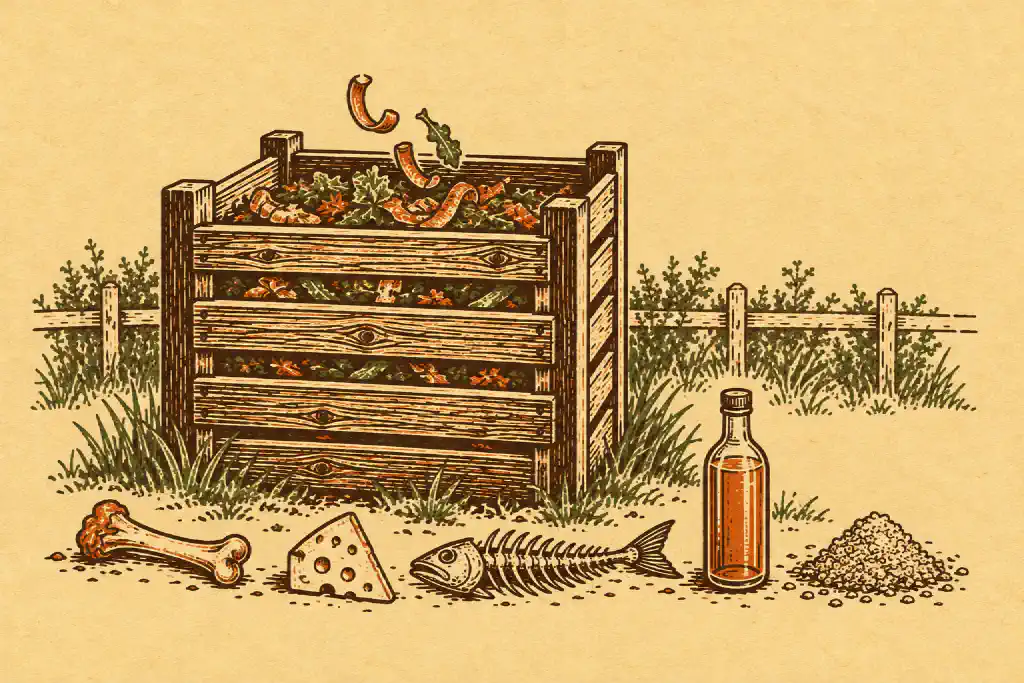
Most composting guides focus on what to add. This one is about what to leave out, because a handful of common additions cause most of the pest problems, smells, and stalled piles that people run into.
Quick fix
- Keep meat, fish, dairy, and cooking oil out entirely — they’re the biggest cause of rats and flies.
- Skip cooked food and pet waste from cats and dogs.
- Throw out, don’t compost, diseased plants and weeds that have gone to seed.
Meat, fish, dairy, and oils
These break down fine in an industrial composting facility, which runs hot enough, consistently enough, to handle them safely. A backyard pile doesn’t get anywhere near that. Left in a home pile, they smell strongly as they decompose, and they are one of the most reliable ways to attract rats, flies, and other scavengers. Cooking oil and fat cause a related problem: they don’t break down cleanly, they coat other material and slow it down, and they smell rank as they go rancid.
If you want to deal with food scraps that include meat and dairy, a sealed bokashi bin can. It ferments rather than composts — a different process entirely, designed to handle exactly this kind of waste safely. It’s a separate system from an open pile, though, not something to mix in, and the fermented result still needs burying in soil or adding to a pile before it’s finished.
Cooked food
Even without meat or dairy in it, cooked food behaves differently from raw scraps once it starts breaking down: it goes slimy and smelly faster, and like meat, it’s a strong pest attractant. Raw vegetable peelings, fruit scraps, and coffee grounds are fine. Leftover pasta, rice, or cooked vegetables are best going elsewhere, ideally a city or county food-scrap collection if you have one.
Pet waste
Waste from cats and dogs can carry pathogens that a home compost pile won’t reliably kill, since backyard piles rarely sustain the high temperatures needed to neutralize them. Keep it out of the home pile entirely. Cat and dog poop can carry roundworm eggs (toxocariasis), and cat poop can carry toxoplasmosis, which is a particular risk in pregnancy. Herbivore manure is a different matter, and a useful addition; the browns-and-greens reference guide covers it.
Diseased plants and weeds gone to seed
Disease and fungal problems can survive the composting process in a typical home pile and ride back out with the finished compost, straight onto the beds you spread it on. Weed seeds do the same: rather than being killed off, they get redistributed around your garden. Send both to a city or county yard-waste collection, which processes material at higher, more consistent temperatures than a backyard pile can manage. A genuinely hot, well-managed pile can kill off some seeds and pathogens — but that’s hard to guarantee at home, so treat it as a maybe, not a certainty.
Glossy paper and large woody material
Glossy or heavily coated paper — magazines, shiny flyers — often has coatings that resist breaking down and can leave unwanted residue in the finished compost. Plain cardboard and newspaper are fine. Large woody material fails differently: whole branches, thick prunings, and big lumber scraps can sit in a pile for years without much changing. If you want to compost wood, shred or chip it first so the process has surface area to work on. Whole branches are better sent to a yard-waste collection, or used elsewhere — as edging, or kindling.
What this leaves you with
Cutting these out doesn’t shrink your options much. Raw fruit and vegetable scraps, coffee grounds and tea leaves, eggshells, yard trimmings, dry leaves, cardboard, and shredded paper cover the large majority of everyday household and yard waste, and none of them carry the same pest or pathogen risk. When in doubt about something specific, leave it out and find another route for it, rather than risk it in the pile.