Composting through winter
Compost slows in winter but doesn't die. Keep adding scraps, turn less, insulate the outside, and expect a fast restart in spring.
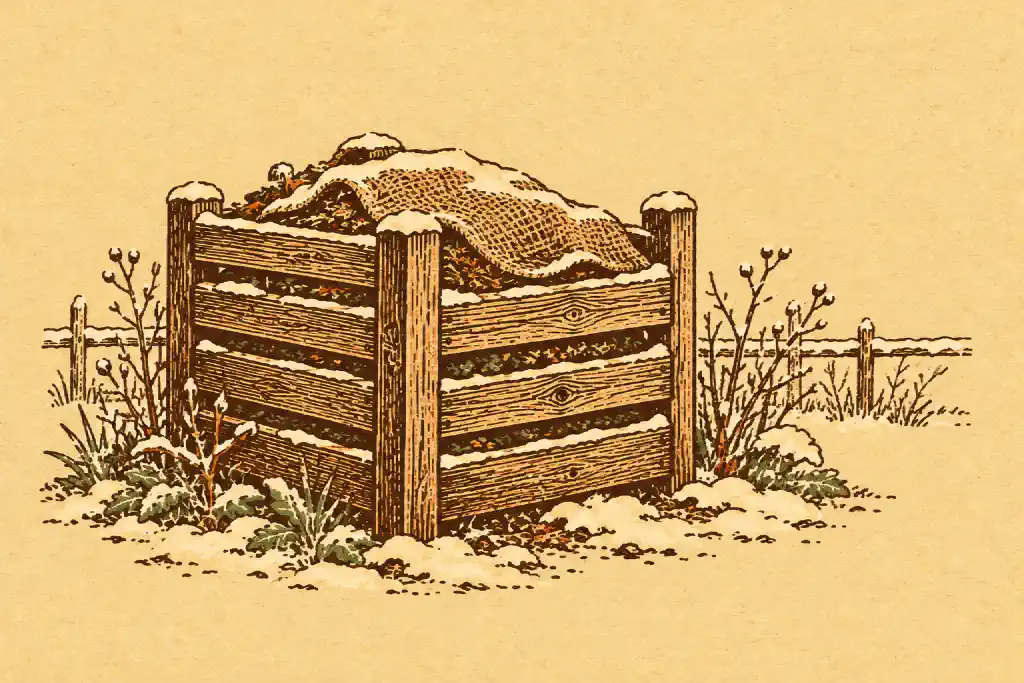
Composting is driven by living organisms, and like most of the garden, their activity drops when temperatures fall. A pile that was steaming and shrinking fast in September can look almost frozen in place by January. That’s expected, not a sign something has gone wrong.
Quick fix
- Keep adding scraps through winter even though the pile isn’t visibly shrinking — you’re stockpiling for a spring restart.
- Stop turning as often once it’s cold; opening the pile up lets heat escape.
- Insulate the outside with a thick layer of leaves, straw, or an old blanket if you have one.
Why it slows down (not stops)
The bacteria and fungi that do most of the work slow right down in the cold, and some go dormant. A pile that was hot in the middle over summer will cool, and visible breakdown will slow to a crawl. Underneath that quiet surface, slower activity usually continues — especially toward the center of a decent-sized pile, which holds onto some of its own heat even in cold weather. Don’t mistake slow for dead. Plenty of small bins never feel warm even in summer and still make compost, as Compost not heating up explains. Most piles come back to life on their own once the weather warms.
Keep adding through winter
It’s tempting to stop feeding a pile that looks like it’s doing nothing. That’s the wrong instinct. Keep adding your usual kitchen scraps and yard trimmings through the colder months — not because they’ll break down quickly, but because you’re building a stock of material that will kick off fast once temperatures rise and the organisms wake back up. Stop adding over winter and you delay that restart by however long it takes to build the pile back up.
Stop turning as often
In the warmer months, turning helps: air gets in, material gets mixed. In winter it mostly releases the heat the pile has managed to hold onto, which sets it back further. Leave a winter pile largely undisturbed, turning only occasionally rather than on your summer schedule, so the core keeps whatever warmth it can generate.
Insulate the outside
A layer of insulation around the outside — dry leaves, straw, burlap sacking or an old wool blanket — holds in the heat generated inside and buffers the pile against hard frost. An open pile needs this more than an enclosed bin, which has some shelter built in, but even bins benefit in a hard cold spell. Keep whatever you use loose: a covering that breathes works better than something wrapped tight enough to seal out air.
Bin versus open pile in the cold
An enclosed bin holds heat better than an open pile of the same size, simply because it has walls between the compost and the cold air. If you’re starting a new setup and know you get hard winters, that alone makes a bin worth considering. If yours is a closed plastic cone (“dalek”) bin that was already slow before the cold arrived, see Plastic cone compost bin not working?. An open pile still works in winter, though — build it a bit larger than you might in summer, since a bigger mass loses heat more slowly relative to its size. A tumbler is the opposite case: a small drum raised off the ground with cold air all around it, so in a hard winter it may simply stop until spring. That’s fine; it restarts as it warms.
Stockpile your browns in fall
Dry browns — leaves especially — are abundant in fall and much harder to come by once winter sets in. Before the season turns, set aside a stash of dry leaves or cardboard somewhere dry (a bag in a shed or garage works fine) so you have browns on hand to balance the kitchen scraps you’re still adding. Running short of browns in midwinter, with wet weather and few dry leaves left on the ground, is a common reason winter piles turn wet and smelly rather than just quiet.
What to expect in spring
As temperatures rise, most piles restart on their own: the pile starts shrinking again, maybe steams a little on a cool morning, and returns to that familiar earthy smell. Once the weather has properly warmed, give it a turn to mix in everything you added over winter and get air moving through the whole pile again. Then check the bottom: Is my compost ready? shows how to tell what’s finished.